.png)

A Guide to Teppanyaki Menu Options

That moment when the chef steps up to the hot plate, tools in hand, changes the whole mood of dinner. A good guide to teppanyaki menu options is not just about picking chicken or steak - it is about knowing how the meal unfolds, what suits your group, and how to get the best mix of flavour, theatre and value from the table.
Teppanyaki is different from a standard restaurant order. You are not choosing food in isolation. You are choosing an experience built around timing, chef interaction, shared excitement and dishes cooked fresh in front of you. That is why the menu matters more than many first-time diners expect.
What makes teppanyaki menu options different
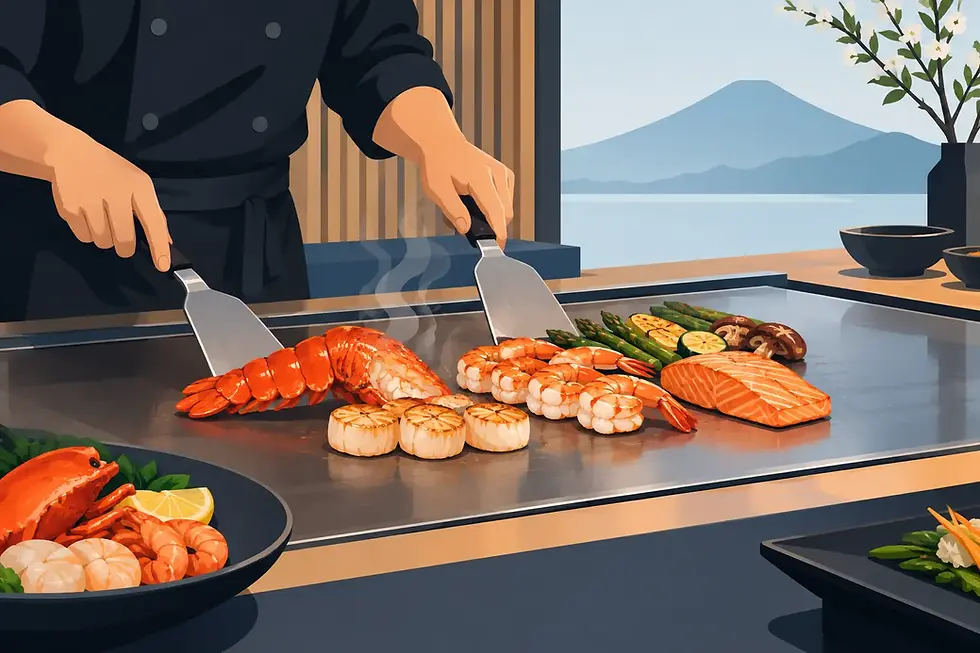
At a teppanyaki restaurant, the menu is designed for live cooking. That changes both the food itself and the way you choose it. Proteins, seafood, rice, noodles and vegetables are selected not only for taste, but for how well they perform on the grill and how they fit into a flowing table-side show.
This usually means the menu is more focused than at a broad Japanese restaurant. You may see fewer raw dishes or long pages of separate mains, but each option is chosen with purpose. The result is a dining style that feels energetic and polished, with the chef bringing flavour and performance together in real time.
For guests, that creates a simple question - do you want to build your meal around a favourite ingredient, or around the kind of night you want to have? Sometimes those are the same thing. Sometimes they are not.
A guide to teppanyaki menu options by category
The easiest way to read a teppanyaki menu is by thinking in layers. Start with the hero item, then consider what will round it out.
Steak and beef options
Beef is one of the classic teppanyaki choices because it delivers both flavour and drama on the grill. A well-cut steak sears beautifully, develops rich caramelisation and feels a little more indulgent for date nights, birthdays or group celebrations.
If you like bold flavour and a more premium feel, beef is often the safe bet. The trade-off is price. It is usually one of the higher-value menu items, so it makes sense when you want dinner to feel like an occasion rather than a quick bite.
Chicken dishes
Chicken is one of the most approachable menu options on a teppanyaki grill. It tends to suit a wide range of diners, including guests who prefer familiar flavours or want something satisfying without going too heavy.
It is also a practical choice for mixed groups. If one person wants seafood and another wants steak, chicken often sits comfortably in the middle as an easy crowd-pleaser. It may not feel as luxurious as premium beef or scallops, but it often wins on versatility.
Seafood selections
Prawns, scallops, fish and other seafood options bring freshness and a lighter feel to the table. They are especially popular in coastal dining spots where guests want something that matches the setting - vibrant, fresh and a bit more special.
Seafood can also be ideal if you want a menu that feels celebratory without being too rich. The only real consideration is preference and confidence. Some diners know exactly what they like, while others prefer to keep seafood as part of a mixed set menu rather than the whole focus of the meal.
Combination meals
If you cannot choose between land and sea, you probably do not need to. Combination options are often the smartest move for first-time teppanyaki diners because they give you contrast in both flavour and texture. Think steak with prawns, or chicken alongside seafood.
This is where value often becomes clearer too. A combination meal can feel more complete than ordering one standalone protein, especially if you are trying to sample the full teppanyaki experience in a single sitting.
Rice, noodles and vegetables
These are not throwaway extras. Fried rice, garlic rice, stir-fried vegetables and noodles do a lot of work in a teppanyaki meal. They balance richer proteins, make the meal feel generous and often become part of the chef's live cooking sequence.
If you are dining with hungry friends or teenagers, sides matter. If you are planning a lighter dinner before drinks or a night out in Surfers Paradise, you may want to keep them more restrained. It depends on the occasion.
Set menus versus choosing à la carte
One of the biggest menu decisions has nothing to do with the grill itself. It is whether to choose a set menu or order more selectively.
Set menus are ideal when you want the full teppanyaki rhythm without overthinking every course. They suit couples, tourists, group bookings and anyone who wants the evening to flow smoothly. In many cases, they also make budgeting easier because the experience is packaged clearly from the start.
À la carte choices can work well if you already know what you love or if your group has very different appetites. The trade-off is that the meal may feel less structured. That is not a problem, but it is worth knowing if you are booking for a celebration where ease matters just as much as choice.
How to choose the right teppanyaki menu for your group
The best teppanyaki meal is rarely about one person ordering in a vacuum. Group dynamics matter.
For date nights, many diners lean towards premium combinations or seafood and steak pairings. These choices feel a bit elevated and match the atmosphere of a more memorable night out. For families, simpler proteins, rice dishes and flexible combinations usually work better because they appeal across age groups.
For birthdays, hens nights, work dinners or holiday groups, set menus often shine. They keep everyone on the same page and let the chef focus on the fun, high-energy side of service. At a venue like Asami Teppanyaki, where the table-side cooking is part of the attraction, that flow can make the night feel sharper and more engaging.
Dietary needs and what to check before you book
A strong guide to teppanyaki menu options should always include dietary considerations, because group dining is where they matter most. Gluten-free options can make a real difference when one person in the party would otherwise feel limited, and they are worth checking in advance rather than assuming every sauce or side will suit.
The same goes for seafood allergies, vegetarian preferences or guests who simply want a lighter meal. Teppanyaki can be flexible, but not every menu item can be adjusted on the spot without affecting the dish. A quick check before your booking helps the kitchen prepare properly and avoids awkward changes at the table.
What first-time diners often get wrong
The most common mistake is treating teppanyaki like a standard restaurant menu and ordering too narrowly. If you only focus on a single protein, you can miss the variety that makes the meal exciting.
Another mistake is underestimating portions and sides. A plate of fried rice or vegetables may sound secondary on paper, but in a live grill setting it often becomes part of the experience and helps round out the meal. On the other hand, if you are a lighter eater, going all-in on multiple extras can leave you too full halfway through the show.
Timing matters too. Teppanyaki works best when you arrive ready to settle in and enjoy the performance, not rush through dinner. Choosing the right menu is part of that.
Reading the menu with the experience in mind
If you are scanning a teppanyaki menu before booking, ask yourself three simple things. Do I want something familiar or something a bit more elevated? Am I booking for food first, or for the full social experience? And will this choice suit the rest of the table?
Those questions usually lead you in the right direction. Steak and seafood combinations tend to suit occasion dining. Chicken and rice-based meals are reliable for broader groups. Set menus suit guests who want the complete event without fiddling over every detail.
The beauty of teppanyaki is that the menu is only half the story. Once the grill heats up and the chef starts working, even a simple meal feels more vivid, more social and more memorable than a standard dinner order.
Choose with the night in mind, not just your appetite, and the whole experience lands better.


Comments