.png)

Gluten Free Teppanyaki Options Explained

When you are the one asking about gluten free teppanyaki options while everyone else is eyeing off the flames, flying utensils and fried rice, it can feel like you have to choose between safety and fun. The good news is you usually do not. Teppanyaki can be one of the more flexible ways to dine out because so much of the meal is cooked fresh in front of you, which makes it easier to ask questions, adjust ingredients and enjoy the show without second-guessing every bite.
That said, gluten-free teppanyaki is not automatic. The grill might be hot, the ingredients might be fresh, and the chef might be cooking in full view, but sauces, marinades and cross-contact still matter. If you know what to look for, the experience becomes much easier to navigate.
What makes teppanyaki a good fit for gluten-free diners
Teppanyaki has one major advantage over many other restaurant styles - the cooking is immediate and visible. Instead of guessing what happened in the kitchen, you can often see the ingredients going onto the plate-sized grill in real time. That creates more room for simple swaps and clearer communication.
A lot of teppanyaki favourites start with naturally gluten-free ingredients such as plain vegetables, rice, seafood, eggs and unseasoned cuts of meat. On paper, that sounds straightforward. In practice, the challenge is usually not the core ingredient. It is the extras that bring the risk, especially soy sauce-based seasonings, pre-mixed marinades and items cooked on the same surface as gluten-containing dishes.
This is where a quality teppanyaki venue stands out. A good restaurant will know its menu, understand dietary requests and tell you honestly what can be adapted and what cannot.
The gluten free teppanyaki options most people can enjoy
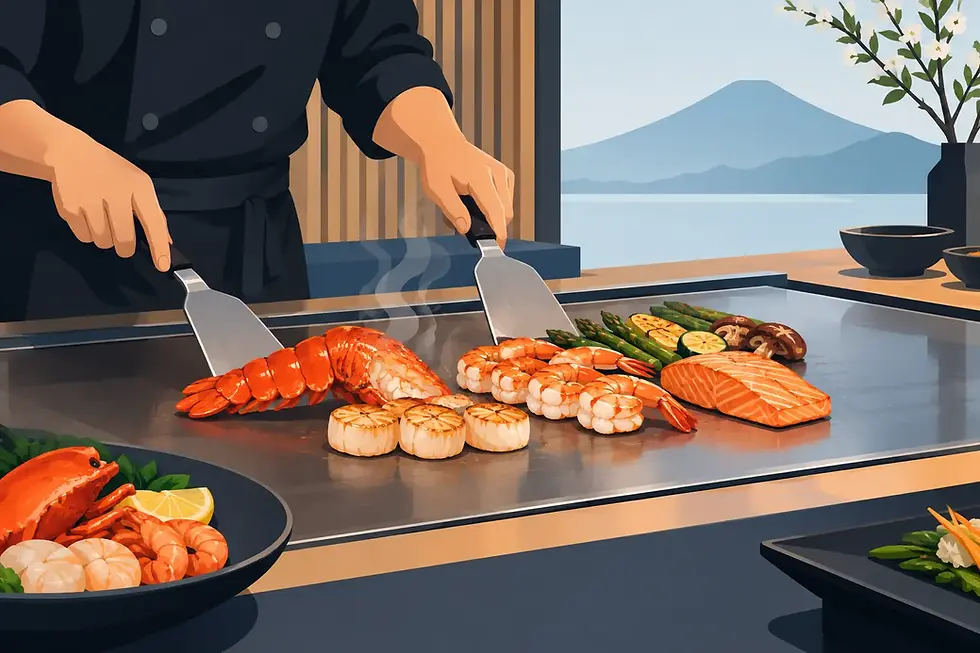
The best gluten free teppanyaki options are usually the simplest ones. Fresh prawns, scallops, fish, chicken, steak and vegetables can often be prepared without gluten if they are not pre-marinated in a sauce that contains wheat. Plain steamed or fried rice may also be suitable, but only if the seasoning is checked carefully.
Egg-based dishes can be another good option, although again it depends on what is added during cooking. Even a small splash of regular soy sauce can change the answer.
Vegetables are often one of the safest places to start. Mushrooms, zucchini, onion, capsicum, bean sprouts and other teppanyaki staples are naturally gluten-free. They only become an issue if they are seasoned with a wheat-based sauce or cooked on a contaminated part of the grill.
Protein is where diners often need to ask a few more questions. Teppanyaki chicken and beef are frequently seasoned before they hit the hotplate. Seafood may be brushed with butter, soy or a house glaze. None of that means the dish is off limits. It just means the safest version may be the one made fresh with simple seasoning.
Rice deserves special attention because many people assume it is always safe. Plain rice usually is. Fried rice, garlic rice or chef-seasoned rice may not be if regular soy sauce or another gluten-containing seasoning is used. If you are ordering for a group, it is worth asking whether a separate gluten-free rice serve can be prepared.
Where gluten can sneak in at teppanyaki
If you have ever scanned a menu and thought, it all looks like meat and veg, why is this complicated, you are not alone. Teppanyaki looks naturally gluten-free until the flavour layer comes into view.
Regular soy sauce is the big one. Because it is used so often in Japanese-style cooking, it can appear in marinades, dipping sauces, fried rice, noodle dishes and even on vegetables. Teriyaki sauce is another common source of gluten because it typically includes soy sauce and thickening ingredients.
Then there are obvious menu items such as noodles, tempura and crumbed sides. Those are usually easy to spot. Less obvious are pre-made spice blends, bottled sauces, soup bases and shared cooking utensils.
Cross-contact can also be a real issue in live cooking environments. A chef may be preparing breaded items, noodles and soy-based dishes on the same grill. The performance is part of the appeal, but from a dietary point of view, the shared surface matters. For someone avoiding gluten by preference, minor contact might be an acceptable risk. For someone with coeliac disease, that is a very different conversation.
How to order with confidence
The easiest way to enjoy teppanyaki without stress is to be clear early. Let the restaurant know when booking, not just when you sit down. That gives the team time to advise on menu choices and prepare for any adjustments needed on the night.
When you arrive, mention it again. A quick, direct explanation works best. If you are medically required to avoid gluten, say so. If you are gluten-free by preference, that is useful to mention too, because the level of risk you are managing may be different.
Specific questions get better answers than broad ones. Instead of asking, “What is gluten-free?” ask whether the chicken is marinated, whether gluten-free soy sauce is available, whether rice can be cooked separately, and whether the chef can use clean utensils on a clean section of the grill.
You do not need to make it awkward. Good hospitality thrives on clarity. Restaurants that handle dietary needs well would much rather have a clear request than a disappointed diner halfway through service.
Group dining gets easier with the right planning
Teppanyaki is built for birthdays, date nights, family dinners and group celebrations, which is exactly why gluten-free dining can feel more complicated in this setting. Shared banquets and set menus are great for energy and flow, but they can make substitutions trickier if nobody has planned ahead.
The simplest approach is to flag the dietary requirement before the booking is confirmed. If the group is sharing a set menu, ask what can be modified for one guest and whether that guest will receive tailored dishes instead of the standard inclusions.
This matters because some gluten free teppanyaki options are easy to prepare individually, while others are harder to adjust once the meal is underway. A separate serve of plain protein and vegetables is usually manageable. Reworking a sauce-heavy shared course at the last minute is less so.
For mixed groups, this is where a restaurant with genuine experience shines. Nobody wants the gluten-free guest to feel like an afterthought, and nobody wants the rest of the table held up by confusion. With the right communication, everyone gets to enjoy the same atmosphere, same theatre and same sense of occasion.
What a better teppanyaki experience looks like
A strong gluten-free dining experience is not just about removing ingredients. It is about feeling included in the event. The chef still works the grill, the food still arrives fresh and sizzling, and the table still gets that front-row buzz that makes teppanyaki memorable.
That is why flexibility matters so much. The best venues understand that dietary requirements should not flatten the experience. They know how to keep the flavour, keep the pace and keep the meal feeling special, even when adjustments are needed.
At a place like Asami Teppanyaki in Surfers Paradise, that balance is part of the appeal. Guests are there for the performance as much as the plate, so menu flexibility and warm service go a long way in making group dining feel easy, not complicated.
A few trade-offs worth knowing
Gluten-free dining at teppanyaki can be excellent, but it does come with the occasional compromise. You may need to skip a signature sauce. The fried rice might need a simpler seasoning. A dish that is full of flavour in its standard version may be prepared more minimally for safety.
That does not automatically mean less enjoyable. Fresh steak on a hotplate with garlic butter, crisp vegetables and well-cooked seafood can be brilliant without a heavy sauce. But expectations help. If you are looking for a one-to-one replica of every menu item in gluten-free form, it will depend on the restaurant.
The key is knowing what matters most to you. If it is strict safety, ask detailed questions and keep the order simple. If it is broad menu choice, pick a venue that advertises dietary flexibility and understands the difference between preference and medical need.
The best nights out are the ones where you can relax into the experience. With the right questions, the right venue and a little planning, gluten-free teppanyaki can still deliver exactly what people come for - great food, a lively table and that unmistakable moment when the grill fires up and the whole room leans in.


Comments