.png)
What Is Teppanyaki Dining Exactly?

You hear the sizzle before the first plate lands. A burst of flame lifts from the hotplate, someone at the table laughs, and suddenly dinner feels less like a booking and more like a front-row event. If you’ve ever wondered what is teppanyaki dining, the short answer is this - it’s a Japanese-style dining experience where skilled chefs cook your meal on a flat iron grill right in front of you, combining fresh food, live performance and genuine hospitality.
That answer is true, but it only tells part of the story. Teppanyaki is popular because it turns a meal into shared entertainment without losing the quality and care people expect from a great restaurant. You’re not tucked away waiting for plates to appear from a hidden kitchen. You’re in the middle of the action, watching each ingredient hit the grill, smelling the aromas as they build, and enjoying the chef’s timing, technique and personality along the way.
What is teppanyaki dining really about?
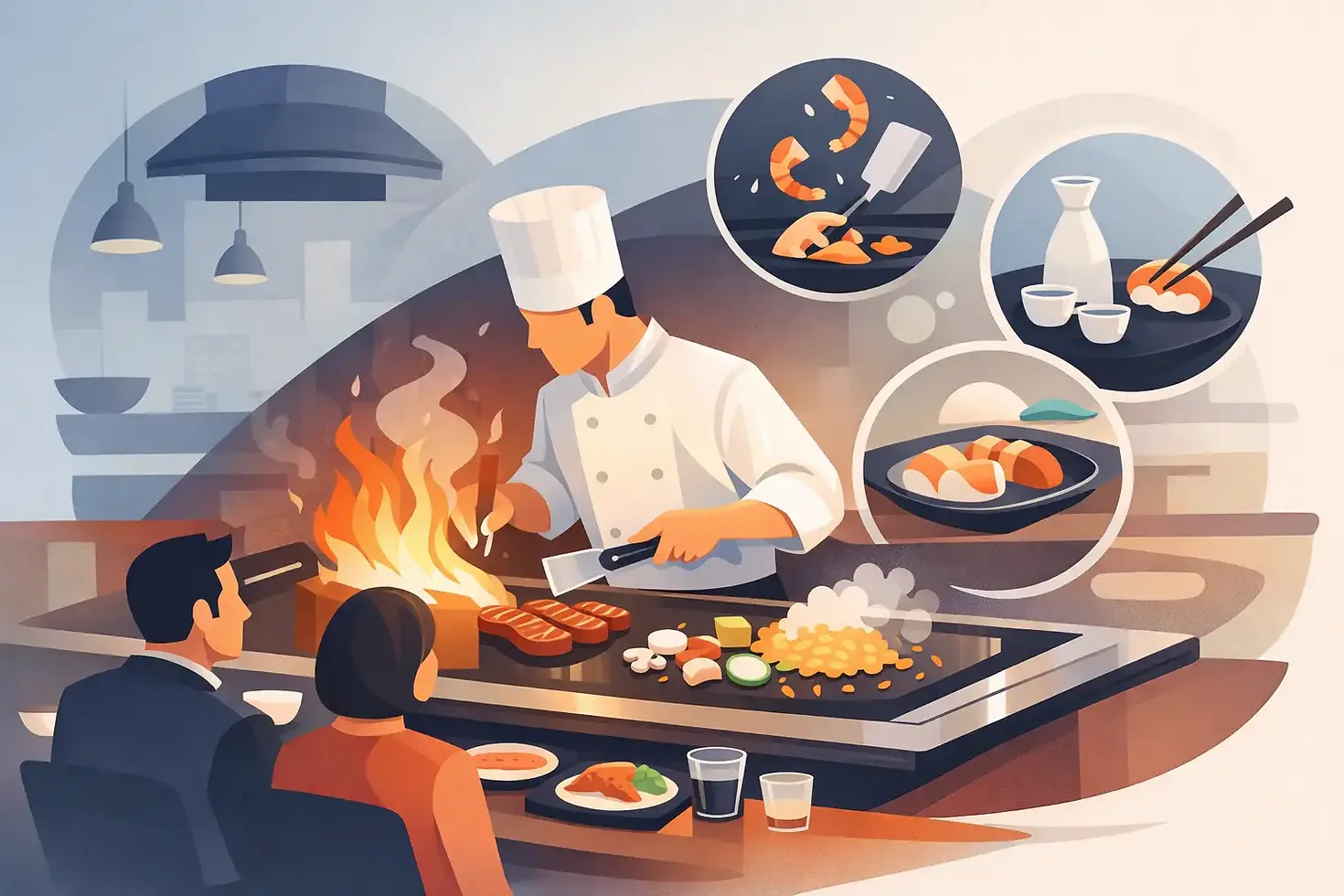
At its core, teppanyaki dining is all about cooking on an iron plate. The word itself comes from Japanese terms that refer to a flat iron grill and grilling or pan-frying. In practice, that means your chef prepares meats, seafood, vegetables, rice and other ingredients directly at your table on a large heated cooktop.
What makes it different from a standard restaurant meal is the live element. The chef isn’t only preparing food. They’re controlling heat, pace and presentation in real time while engaging the table. That can include knife work, playful tricks, dramatic flame moments and a style of service that feels lively rather than formal. The result is immersive. You don’t just eat teppanyaki - you experience it.
For many diners, that’s the real draw. Teppanyaki suits people who want more than a quiet meal, especially for birthdays, date nights, family dinners, group celebrations or holiday outings where atmosphere matters just as much as the menu.
How teppanyaki dining works
A teppanyaki restaurant is usually arranged around large grill tables, with guests seated around the cooking surface. Instead of facing a dining room and waiting for service from a distance, you’re seated right where the cooking happens. Once everyone is settled, the chef begins preparing the meal course by course in full view.
You might start with lighter items, then move into vegetables, fried rice, seafood, chicken or premium cuts of beef depending on the set menu or your order. Timing matters. A good teppanyaki chef knows how to keep the table entertained while making sure each ingredient is cooked properly and served at the right moment.
That’s one reason teppanyaki can feel so polished when it’s done well. There’s a lot happening at once - heat management, knife control, portioning, conversation, plating and the natural rhythm of the group. It looks effortless from the table, but it relies on real skill.
What food do you eat at teppanyaki?
One of the reasons teppanyaki appeals to such a broad crowd is that the menu can suit different tastes without losing the excitement of the experience. You’ll often see options built around fresh prawns, scallops, salmon, steak, chicken and seasonal vegetables, usually served with rice and sauces that complement rather than overpower the ingredients.
The emphasis is usually on freshness and clean flavours. Because the food is cooked right in front of you, there’s nowhere to hide. Diners can see the quality of the ingredients, the portion size and the chef’s technique from the first moment to the last.
That visibility is a major part of the appeal. It feels honest, immediate and satisfying. For groups, it also removes some of the guesswork that can come with more traditional restaurant formats. Everyone can see the meal taking shape together.
There is some variation between venues, though. Some teppanyaki restaurants lean heavily into the performance side, while others focus more on premium ingredients and refined execution. The best ones manage both.
Why people love the teppanyaki experience
There are plenty of restaurants that serve excellent food. Teppanyaki stands out because it gives people something to talk about before the first bite and long after the last one. That matters, especially for diners choosing a venue for a celebration or a night out that needs a bit of energy.
For couples, teppanyaki can feel more relaxed and fun than a traditional fine dining setting. There’s conversation built into the experience, and the live cooking creates natural moments that make the night feel memorable without trying too hard.
For families, it keeps everyone engaged. Children are often fascinated by the movement, sound and fire, while adults appreciate that the entertainment comes with a proper meal rather than distracting from it.
For groups, teppanyaki works because it’s social by design. Everyone shares the same focal point. Instead of splitting attention between menus, mobiles and separate conversations, the whole table tends to stay present. That shared energy is a big part of why teppanyaki is such a popular choice for birthdays, work dinners and holiday catch-ups.
Is teppanyaki the same as hibachi?
This is one of the most common points of confusion. In many places, especially outside Japan, people use teppanyaki and hibachi interchangeably. They’re not exactly the same.
Teppanyaki refers to cooking on a flat iron plate. Hibachi traditionally refers to a different type of heating or grilling device. In everyday restaurant conversation, plenty of diners still use both terms to describe the same kind of live grill experience, so it’s understandable. But if you’re asking what is teppanyaki dining in the proper sense, it’s the flat-top grill style you’re talking about.
The distinction matters mostly for accuracy rather than enjoyment. From a guest point of view, what really matters is the quality of the cooking, the freshness of the ingredients and the atmosphere around the table.
What to expect when you book teppanyaki
If it’s your first time, it helps to know that teppanyaki dining is usually more interactive than a standard meal. You’ll be seated with your own group or sometimes with other guests around the grill, depending on the restaurant and the booking format. That shared-table setup is part of the charm, but it also means the experience can feel lively, social and at times a bit louder than a quiet restaurant.
That’s usually a plus. If you’re after a high-energy meal with personality, teppanyaki delivers. If you’re planning an ultra-private conversation or a very subdued dinner, it may not be the ideal fit on a busy night. Like any dining style, it depends on the occasion.
You should also expect the pace to be different. Because the cooking happens in front of you, dinner unfolds as a performance as much as a service sequence. There’s anticipation built into each course, and that’s part of the fun.
For people with dietary needs, it’s worth checking the menu in advance or asking about options when booking. Teppanyaki can be accommodating, especially because the cooking is made to order, but not every venue handles variations in the same way.
Why teppanyaki suits Surfers Paradise so well
A place known for holidays, celebrations and nights out naturally pairs well with a dining style that feels vibrant and memorable. Teppanyaki fits that mood because it offers more than a meal - it gives locals and visitors a reason to make dinner part of the event.
That’s especially true in a destination setting where people want something worth booking ahead for. In Surfers Paradise, teppanyaki has strong appeal because it works across so many occasions. It can be casual enough for a spontaneous night out and special enough for anniversaries, birthdays and holiday dinners that deserve a bit more atmosphere.
At venues like Asami Teppanyaki, that mix of fresh cooking, chef performance and warm table-side hospitality is exactly what turns dinner into an experience people remember.
Is teppanyaki dining worth trying?
If you enjoy restaurants where the atmosphere matters as much as the menu, teppanyaki is absolutely worth trying. It offers something many dining formats don’t - real interaction, visible skill and a sense that the night is unfolding right in front of you.
It’s not only about dramatic flames or chef tricks, and the best teppanyaki restaurants know that. The show should support the meal, not cover for an average one. When the ingredients are fresh, the cooking is sharp and the hospitality is genuine, teppanyaki feels exciting in all the right ways.
For first-timers, that usually means one thing. You arrive expecting dinner and leave talking about the whole experience. If your next meal out needs a bit more energy, a bit more theatre and a lot more sizzle, teppanyaki is a very good place to start.


Teppanyaki presents a unique dining paradigm that intertwines culinary skill with live entertainment, creating a vibrant social atmosphere. While it offers a feast for the senses, one must not overlook the subtler nuances such as the management of heat and timing—essential for a successful meal. The balance of performance and food quality is crucial, and without it, the experience can falter, much like in the case of Kings Chance where expectation and reality don’t align seamlessly.