.png)
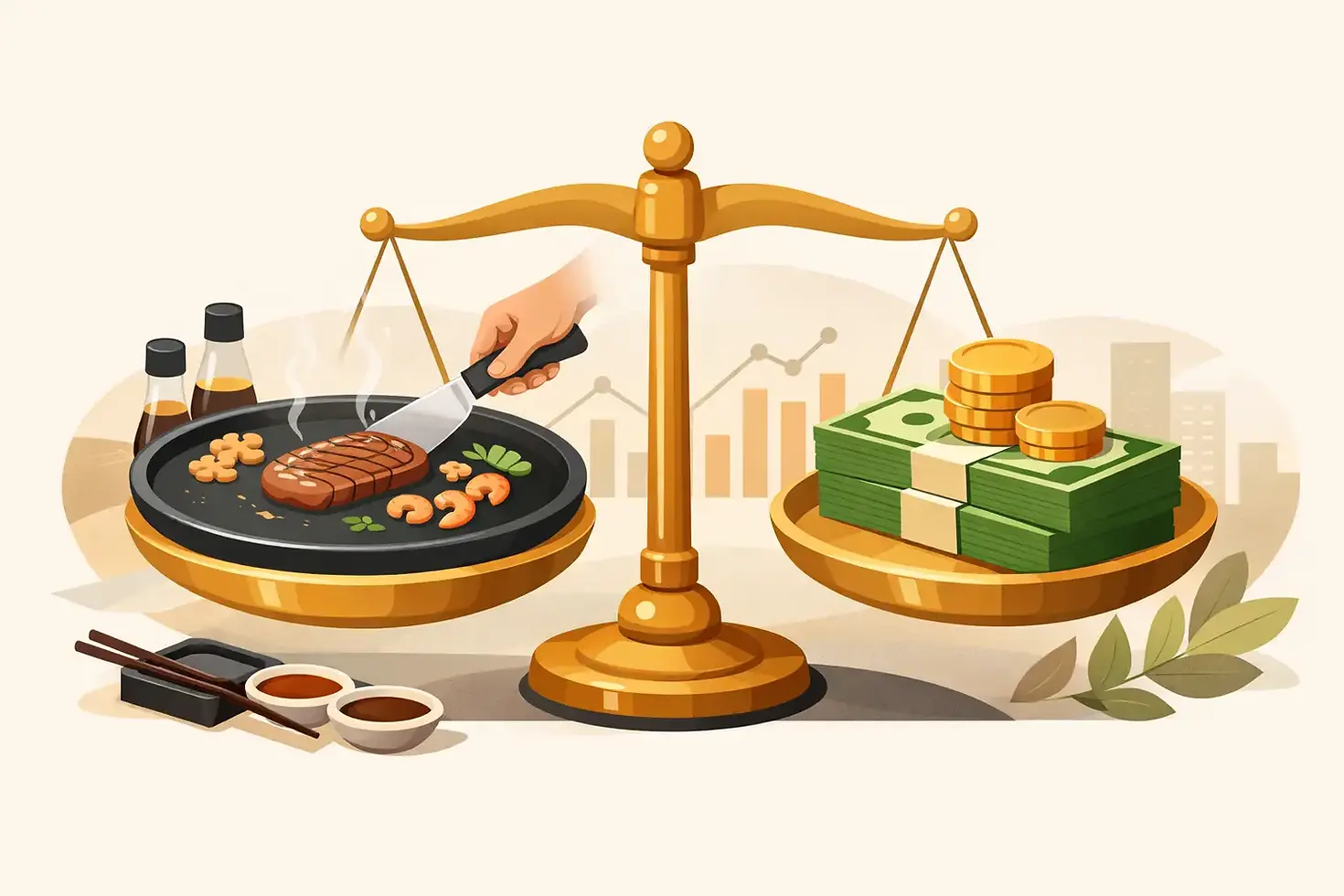
Is Teppanyaki Expensive? Here’s the Real Cost
- joycepalermo

- Apr 29
- 5 min read
You can spot the question straight away when people are planning a night out - is teppanyaki expensive, or does it just look that way from the outside? It’s fair enough. When chefs are cooking right in front of you, flipping utensils, serving fresh food straight from the grill and turning dinner into a show, teppanyaki feels different from an ordinary restaurant meal. And usually, it is.
But “expensive” depends on what you think you’re paying for. If you compare teppanyaki to a quick takeaway dinner, yes, it costs more. If you compare it to a full night out with quality food, entertainment and a social atmosphere built into the booking, the value starts to look very different.
Is teppanyaki expensive compared with other restaurants?
In most cases, teppanyaki sits above casual dining on price and around the same level as other experience-led restaurants. That’s because you’re not only ordering a plate of food. You’re booking a live cooking performance, personalised service, premium ingredients and a table that becomes part of the action.
A standard Japanese restaurant might prepare your meal in the kitchen and bring it out once it’s ready. Teppanyaki changes the whole format. Your chef is preparing each course in front of you, timing the meal to the table, interacting with guests and creating that lively, front-row energy people actually remember afterwards. That extra labour, skill and theatre all shape the price.
There’s also a practical side to it. Teppanyaki restaurants need specialised grill stations, trained chefs who can handle both cooking and guest interaction, and a service style built around timing and presentation. It’s a more hands-on experience from start to finish, and that usually means a higher spend per person than a regular sit-down meal.
What you’re really paying for at teppanyaki
The easiest way to think about teppanyaki is this - you’re paying for food, service and entertainment in the one booking. That matters because a lot of dining experiences charge separately for the “night out” feeling. With teppanyaki, the atmosphere is built in.
Fresh ingredients are a big part of the cost. Teppanyaki menus often feature premium proteins like eye fillet, prawns, scallops and salmon, along with cooked-to-order vegetables, rice and sauces. Because everything is being prepared in front of guests, there’s nowhere to hide on quality. Good ingredients need to speak for themselves.
Then there’s the chef element. Teppanyaki chefs are not simply line cooks working behind closed doors. They’re managing heat, timing, presentation and crowd engagement all at once. That takes confidence, training and consistency. When the cooking itself becomes part of the event, you’re paying for expertise in a very visible way.
The social side adds value too. Teppanyaki works brilliantly for date nights, birthdays, family dinners and group celebrations because it gives everyone something to share beyond the meal itself. The sizzle, the movement, the banter and the anticipation around the table all create a more memorable setting than a standard dinner reservation.
Why teppanyaki prices can vary so much
Not every teppanyaki venue is priced the same, and that’s where some confusion comes in. One restaurant may focus on premium set menus and occasion dining, while another leans more casual with simpler inclusions. The gap in price usually comes down to the quality of ingredients, the style of service and the overall location.
A venue in a busy tourism and dining precinct, for example, is often delivering more than a meal. You’re paying for atmosphere, convenience and the kind of restaurant people choose when they want the night to feel special. If the room is polished, the chefs are experienced and the service is designed to make groups feel looked after, the pricing will reflect that.
Menu structure also matters. Set menus can sometimes look expensive at first glance, but they often include multiple courses and a more complete experience than ordering individual dishes elsewhere. On the other hand, à la carte options may suit guests who want more control over spend.
Drinks are another factor. Teppanyaki itself might be reasonably priced for the experience, but cocktails, wine, sake or extra sides can shift the final bill. That doesn’t mean the restaurant is overpriced. It just means the total depends on how you choose to enjoy the night.
Is teppanyaki expensive for families and groups?
It can be, but it can also be one of the better-value group dining options when you look at what everyone gets out of it. Families often like teppanyaki because the live cooking keeps the table engaged. Groups love it because it removes that awkward lull you sometimes get at ordinary restaurants where everyone’s just waiting for food to arrive.
For celebrations, teppanyaki often makes more sense than booking one venue for dinner and another for entertainment afterwards. The event is already happening at the table. That combination can make the spend feel easier to justify, especially for birthdays, holiday dinners or catch-ups with out-of-town visitors.
For parents, there’s another practical bonus. Interactive dining can hold children’s attention far better than a standard restaurant setting. That doesn’t make it cheap, but it can make it feel worthwhile.
When teppanyaki feels worth the money
Teppanyaki tends to feel most worthwhile when the occasion suits the experience. If you just need a fast, low-cost meal before heading home, it may feel like more than you need. If you want dinner to be the main event, it lands very differently.
That’s why so many people choose it for date nights, birthdays, celebrations and holiday dining. You’re getting energy, theatre and fresh food in the one place, without having to manufacture a vibe around the meal. The format does that naturally.
It also feels worth it when the restaurant gets the balance right between performance and quality. The best teppanyaki experiences aren’t only about tricks on the grill. They combine chef skill, welcoming service and properly cooked food that still stands up once the excitement settles.
In a location like Surfers Paradise, where people often want one memorable meal rather than just another booking, that value becomes even clearer. A vibrant teppanyaki restaurant such as Asami Teppanyaki brings together central convenience, occasion-friendly dining and the kind of atmosphere people talk about long after the plates are cleared.
How to decide if teppanyaki fits your budget
The smartest question usually isn’t “is teppanyaki expensive?” but “what kind of night am I trying to have?” If your priority is the lowest possible spend, teppanyaki probably won’t be the cheapest option on the strip. If your priority is value through experience, it can be a strong choice.
Before booking, look at the menu style, whether there are set meals, what proteins are included and whether drinks are likely to add much to the total. Think about whether you’re booking a casual dinner, a celebration or something in between. A premium experience can feel very reasonable when it matches the occasion.
It also helps to compare like for like. Don’t compare teppanyaki with takeaway sushi or a quick pub meal. Compare it with other sit-down dinners, special-occasion restaurants or nights where you’d otherwise spend separately on food and entertainment. That’s where the value is easier to see.
So, is teppanyaki expensive?
Yes, teppanyaki is often more expensive than casual dining, but that’s only half the story. You’re paying for fresh ingredients, chef skill, table-side cooking, atmosphere and a dining experience that feels lively from the first sizzle to the last bite.
For some nights, that will feel like a splurge. For others, it will feel like money well spent because dinner becomes the highlight, not just the lead-up to something else. If you’re after a meal with energy, theatre and a bit of occasion built in, teppanyaki usually earns its place on the bill.
The real trick is choosing it for the right moment - because when the food is fresh, the room is buzzing and the chef brings the table to life, “expensive” can quickly start to feel like “worth it.”


The analysis of teppanyaki pricing reveals a nuanced understanding of value in dining. Considering the various elements at play, such as entertainment and fresh ingredients, helps frame the question of whether teppanyaki is merely “expensive.” Instead, it invites reflection on whether the unique experience it offers aligns with what one seeks in a meal. A well-planned dinner can indeed justify the spend, as seen in a vibrant setting like Bizzo.