.png)
How Chefs Manage Food Allergies at Teppanyaki

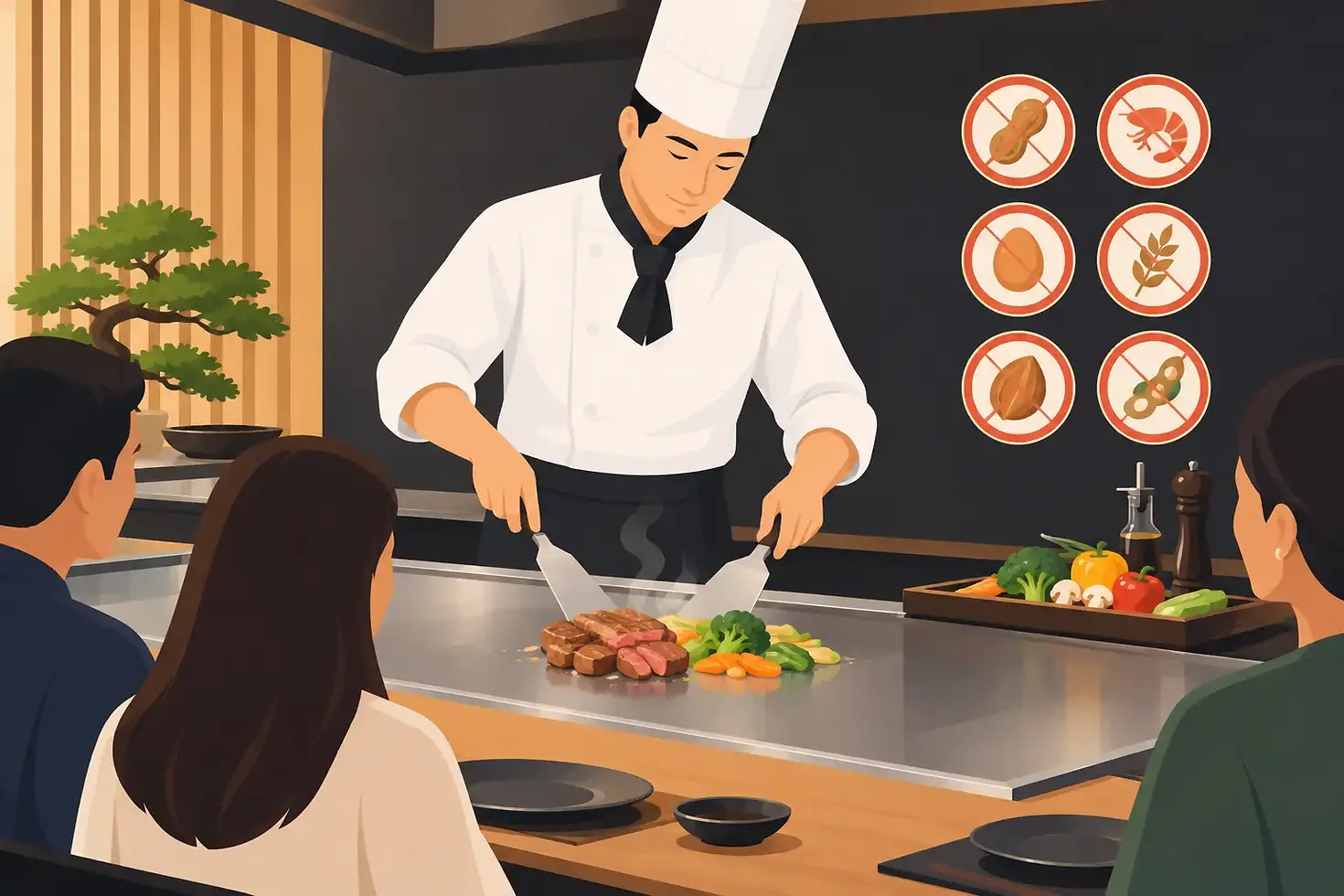
A teppanyaki table is built for big flavours, flying onions and front-row fun. For a guest with a food allergy, though, the best part of the experience starts before the first ingredient reaches the hotplate. Understanding how chefs manage food allergies helps diners make informed choices and gives the kitchen the details it needs to prepare with care.
At a live-cooking restaurant, the chef, front-of-house team and guest all play a role. Teppanyaki is wonderfully interactive, but shared cooking surfaces, sauces and utensils can create extra considerations. Good allergy management is not about making promises lightly. It is about clear communication, ingredient knowledge and thoughtful decisions from booking through to the final bite.
How Chefs Manage Food Allergies Before Service
The safest allergy conversation begins when a reservation is made. Let the restaurant know about any diagnosed food allergy, the person affected and how serious the reaction may be. A note such as “no seafood” can mean different things to different people. Is it an allergy, an intolerance, a personal preference or a dietary choice? Those details change how the team needs to respond.
For a severe allergy, it is helpful to name the specific ingredient or allergen rather than only the dish to avoid. A guest allergic to crustaceans, for example, may need a different approach from someone avoiding fish. The same applies to nuts, sesame, egg, soy, wheat, milk and sulphites. If you carry an adrenaline injector, bring it with you and make sure the people dining with you know where it is.
Once the information reaches the restaurant, the team can review the menu, recipes, sauces and preparation methods. This is where skilled hospitality matters. A chef may know that a plain-looking glaze contains soy, that a seasoning blend includes sesame, or that a side dish is finished with butter. Front-of-house staff can then help set realistic expectations before the group arrives.
Not every request can be accommodated safely. That can be disappointing, particularly when everyone is excited for a celebration dinner, but an honest answer is always the right one. Availability of ingredients, the severity of the allergy, the menu on the day and the shared nature of the cooking environment all matter.
The Allergy Check at the Table
A booking note is valuable, but it should never be the last conversation. On arrival, tell the team again. Before cooking begins, the chef or service staff should confirm the allergy and identify the guest’s meal. This quick check prevents assumptions from travelling down the line.
In a lively teppanyaki setting, tables may include several meals cooking at once. A clear plan helps everyone enjoy the show without uncertainty. The team may arrange the order of cooking, keep an allergy-aware meal separate where possible, or serve that guest first. The right approach depends on the allergen and the restaurant’s setup.
Guests can help by being direct and consistent. If you have told the team you are allergic to shellfish, avoid accepting a shared sauce, garnish or tasting spoon unless it has been checked. It is also wise to ask about drinks and desserts, not only the main course. Allergens can appear in cocktail syrups, ice-cream, dressings and finishing sauces as well as the headline ingredients.
This is not about taking the sparkle out of dinner. It is about making the experience more relaxed. When the team has the right information, you can focus on the sizzle, the skill and the company around the table.
What Careful Kitchen Preparation Looks Like
Food allergy management relies on details that guests may never see. A chef may check labels and recipe information, select suitable ingredients, use clean utensils and prepare an allergy-aware dish away from particular foods where the kitchen layout allows. Separate containers, clean benches and fresh gloves can also be part of the process.
However, the words “separate” and “allergen-free” need care in a restaurant environment. Teppanyaki hotplates are shared surfaces by design. Steam, splatter and cooking tools move quickly during service. Even with thoughtful preparation and cleaning, cross-contact can be difficult to eliminate completely when allergens are handled in the same kitchen or cooked on the same grill.
That is why a responsible restaurant will explain its limitations rather than give false reassurance. For someone with a life-threatening allergy, the decision to dine may need additional discussion with the restaurant and advice from their medical professional. A restaurant can take precautions, but it cannot replace an individual allergy management plan.
Sauces deserve special attention in Japanese-inspired dining. Soy sauce commonly contains wheat, while many marinades, dressings and dipping sauces may include soy, sesame, fish, crustaceans or gluten-containing ingredients. A dish can look simple on the plate yet have several components behind the scenes. Asking for a sauce on the side is sometimes useful, but it does not automatically make a meal suitable. The chef still needs to confirm the ingredients and preparation method.
Food Allergies, Intolerances and Dietary Preferences
These terms are often grouped together, but they are not interchangeable. A food allergy involves the immune system and can cause serious reactions. An intolerance can cause discomfort or illness but generally involves a different physiological response. A dietary preference may be based on faith, ethics, lifestyle or taste.
Every request deserves respect, yet the kitchen’s response may be different for each one. Gluten-free dining, for example, can mean avoiding gluten by preference, managing coeliac disease or responding to a wheat allergy. The safest path is to explain exactly what you need rather than assuming the label tells the full story.
The same principle applies when booking for children. A parent or carer should speak with the team directly, explain the allergy clearly and supervise shared elements of the meal. Teppanyaki brings people together around one hotplate, which makes it a memorable family occasion, but it also means children should not swap food, sauces or utensils with others at the table.
Questions Worth Asking Before You Book
A few well-chosen questions can make a significant difference. Ask whether the restaurant can cater for your specific allergen, whether it is present in the dishes you are considering, and whether cross-contact is possible on the grill or in the kitchen. You might also ask whether sauces can be modified or omitted and whether the team needs advance notice.
Avoid putting staff on the spot with vague questions such as, “Is this safe?” Safety depends on the allergen, the person and the service conditions. A better question is, “I have a diagnosed sesame allergy. Is sesame used in this dish, in the sauce or on the cooking surface, and can you accommodate me safely?” It gives the team something practical to investigate.
For group bookings, nominate one person to communicate the allergy details when reserving the table, then have the affected guest confirm them on arrival. This reduces crossed wires, especially when a birthday, work dinner or holiday catch-up is already full of moving parts.
A Shared Effort for a Better Night Out
At Asami Teppanyaki, the art of teppanyaki comes alive through fresh cooking, chef performance and the energy of the table. Allergy-aware dining works best when that theatre is supported by calm, specific communication. Give advance notice, speak up when you arrive and listen closely if the team explains a limitation or suggests a different choice.
The goal is not to turn a celebratory meal into a checklist. It is to create the confidence that lets everyone settle in, enjoy the chef’s craft and make the night about the moments worth sharing.


Comments