.png)
Can Coeliacs Eat Teppanyaki Safely? What to Ask

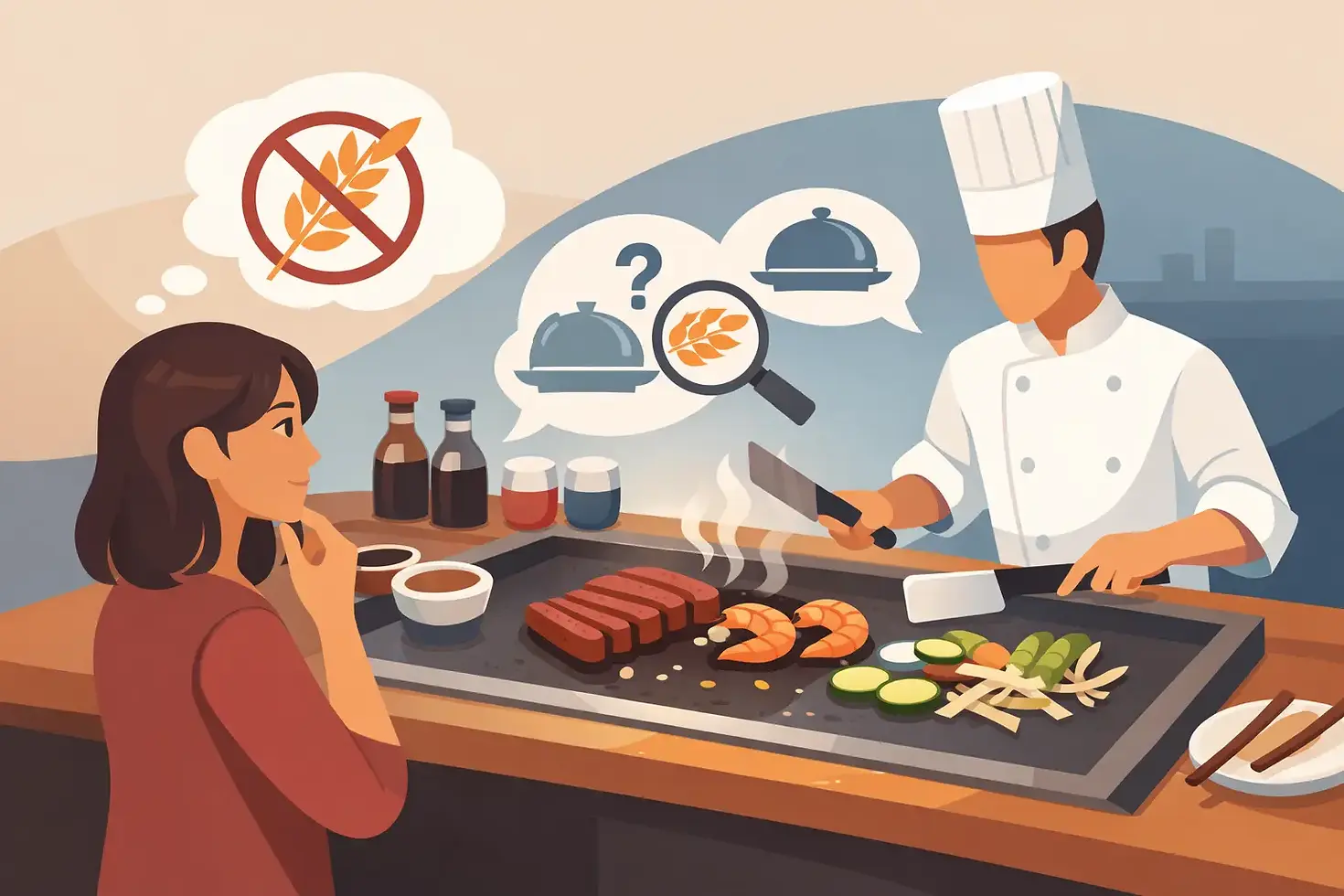
A teppanyaki dinner is all fire, fresh ingredients and front-row chef theatre - but for people with coeliac disease, the hotplate raises one very practical question: can coeliacs eat teppanyaki safely? The answer can be yes, but it depends on the restaurant’s ingredients, preparation methods and willingness to manage cross-contact carefully.
Teppanyaki is a brilliant choice for a celebratory meal because food is cooked in view, often right at the table. That visibility can make it easier to have a clear conversation with the team. It does not, however, automatically make a dish gluten-free. Soy sauce, marinades, shared utensils and residue on a grill can all turn an otherwise suitable meal into a risk.
For anyone with coeliac disease, a gluten-free meal needs more than leaving the noodles off the plate. A little planning before the chef starts the show makes all the difference.
Can Coeliacs Eat Teppanyaki Safely? It Depends on the Grill
Teppanyaki ingredients can be naturally gluten-free: fresh seafood, meat, eggs, vegetables and plain rice are all promising starting points. The challenge is what happens to those ingredients before, during and after they hit the hotplate.
Traditional soy sauce is commonly made with wheat, so it is not suitable for a gluten-free diet. It can appear in marinades, teriyaki sauce, stir-fry sauces, dipping sauces and the seasoning used on rice or vegetables. A chef may also use it throughout the performance, adding it straight onto the grill where it can mix with other food.
Then there is cross-contact. If the same hotplate has just cooked a dish with regular soy sauce, noodles or crumbed items, residue can remain. The same goes for spatulas, oil bottles, bowls, chopping boards and serving utensils. For a person with coeliac disease, even small amounts of gluten matter.
A safe experience usually requires a clean section of grill or a thoroughly cleaned hotplate, clean utensils, gluten-free sauces and a plan to keep the meal separate from gluten-containing dishes. In some restaurants, it may be easiest for the gluten-free order to be prepared first. At others, the kitchen may have a separate process away from the shared teppanyaki table.
There is no single rule for every venue. That is why asking direct questions is far more useful than assuming that Japanese food, grilled food or a dish labelled without wheat will be safe.
What to Tell the Restaurant Before You Arrive
When booking, let the restaurant know that the diner has coeliac disease and needs a strict gluten-free meal. Saying only that someone is avoiding gluten can be misunderstood as a preference rather than a medical dietary requirement.
Advance notice gives the team time to check sauces, organise suitable ingredients and decide how best to manage the hotplate. It is especially helpful for group celebrations, where several dishes may be cooked together and the chef’s service is designed to be fast, social and interactive.
On arrival, remind your host and chef. It is not awkward or fussy - it is part of creating a meal everyone at the table can enjoy with confidence. A good hospitality team will welcome the conversation and explain what can realistically be done.
These are the questions worth asking:
Which dishes can be made gluten-free for a person with coeliac disease?
Is gluten-free soy sauce or tamari used, including in marinades and dipping sauces?
Can the hotplate and utensils be cleaned and kept separate from gluten-containing food?
Will the gluten-free meal be prepared first or in a separate area to reduce cross-contact?
If the answer is uncertain, vague or relies on simply picking gluten-containing items out after cooking, choose another option. A meal is only as safe as the process behind it.
Teppanyaki Dishes That Need Extra Care
Sauces are the first thing to check. Teriyaki is often made with standard soy sauce, and many house-made sauces have ingredients that are not obvious from the finished dish. Even a plain-looking steak or prawn dish may have been marinated before service.
Fried rice also deserves a proper conversation. Rice itself is gluten-free, but fried rice is often seasoned with regular soy sauce on the grill. The same applies to vegetables, which may be tossed through sauce for flavour and colour during cooking.
Noodles, tempura and crumbed items should be treated with caution. Wheat-based noodles are not suitable, while tempura batter contains gluten unless a specific gluten-free batter is used. If these items are being prepared on the same hotplate, their presence can affect the safety of other dishes too.
Dessert and drinks can be easy to overlook. Ask about sauces, biscuit crumbs, ice-cream toppings and flavoured beverages. Plain sake is generally made from rice, but recipes and production can vary, and cocktails may include mixes or garnishes that need checking. The restaurant should confirm each item rather than relying on assumptions.
The Shared-Table Trade-Off
The lively shared-table format is what makes teppanyaki memorable. Your chef is juggling sizzling proteins, flying spatulas, conversation and a table full of eager diners. For a coeliac guest, that theatre can create a practical trade-off: a shared grill increases the need for careful coordination.
If other people in the group are ordering dishes with standard soy sauce, noodles or batter, tell the team early. They may be able to cook the gluten-free order before the rest of the meal, use a separate part of the grill or modify the group’s sauces. What is possible depends on the restaurant’s setup and service flow.
It is also worth speaking with your group. You do not need everyone to eat gluten-free, but a little flexibility can make the experience easier. For example, choosing plain grilled items for the table, skipping crumbed starters or asking for gluten-containing sauces to be kept away from the gluten-free diner can reduce unnecessary complications.
At a venue such as Asami Teppanyaki, where the experience is built around chef-led cooking at the table, advance notice helps the team guide you towards available gluten-free options while keeping the occasion feeling special, not stressful.
How to Read a Confident Answer
A reassuring response is specific. The team should be able to tell you whether the sauce is gluten-free, how the grill is cleaned, whether utensils are changed and which menu choices can be modified. They may also be upfront if they cannot guarantee a coeliac-safe meal because of a heavily shared cooking environment. Honesty is valuable - it lets you make an informed decision.
Be cautious with broad statements such as “there is no flour in it” or “we can make it without soy sauce” if nobody has checked the marinade, cooking surface or serving method. Gluten can arrive through several small steps, not only the most visible ingredient.
For people with coeliac disease, it is reasonable to ask for clarification. You are not asking for a less exciting meal. You are asking for the same care and skill that goes into every great teppanyaki performance.
Make the Night About the Experience, Not the Guesswork
Teppanyaki can still be a fantastic choice for coeliac diners when the restaurant understands the requirement and has a clear process. Fresh grilled seafood, meat, vegetables and rice can deliver all the colour, aroma and table-side excitement of the occasion without relying on gluten-containing sauces or sides.
Book ahead, be clear that the requirement is for coeliac disease, and confirm the details again before the chef begins cooking. With the right questions answered, you can settle into the sizzle, the show and the shared celebration - exactly where your attention belongs.


Comments